LOOK WHAT WE'RE DOING, LOOK WHAT WE'RE DOING!
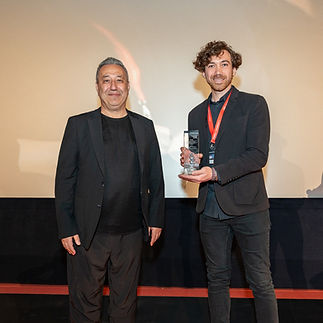
We became the Turkish partner of the 24th and 25th International Frankfurt Turkish Film Festival, and we continue on our path together...

KÖYCEĞİZ GOLDEN LION TURKISH FILM FESTIVAL:
We believe that the most beautiful way to pass on lasting and meaningful values to future generations is through art. Therefore, through cinema, it becomes possible to reach much wider audiences. And through festivals as well... With this sense of responsibility, as Köyceğiz Municipality, we organized our event, which we started in 2001 as “Cinema Days,” and continued it for 13 years under the name “Köyceğiz Kaunos Golden Lion Turkish Film Festival,” creating unforgettable memories for cinema lovers.
With this important festival held in the Köyceğiz district of Muğla; while many significant films met cinema enthusiasts in Köyceğiz, great success was achieved in promoting Turkish cinema to the public through exhibitions, talks, panels, and side events with distinguished guests such as directors, actors, and producers, and the festival became one of the prominent festivals in Türkiye.
Our film festival, which brings together notable figures of Turkish cinema and a selection of the best films of the season with cinema lovers, has presented a rich program in Köyceğiz, featuring FOUR feature-length Turkish films every evening, as well as short films and documentaries, meetings related to the annual theme, Turkish Film Poster Exhibitions, and street and park performances.
Köyceğiz, one of Türkiye’s most important tourism centers, is considered an attractive destination both domestically and internationally due to its geographical location as well as its historical, environmental, and touristic richness, hosting numerous local and foreign visitors every year. For this reason, the KÖYCEĞİZ GOLDEN LION TURKISH FILM FESTIVAL held in Köyceğiz also plays an active role in promoting Türkiye and brings vitality and productivity to our cultural and artistic world.
Cinema tells us our journey, in the world ship where everyone shares the same fate, through a different language—the language of cinema. And while turning this language into a shared passion, it was thought: why not meet in a common space? While directors wish to tell us their dreams, we hoped to find ourselves within those dreams. For this reason, we have successfully organized the Köyceğiz Golden Lion Turkish Film Festival THIRTEEN times.
While watching a film, paths open for us to understand one another, and tangible opportunities for dialogue emerge. So why not transform the multidimensional communication possibilities of cinema into dialogue and mutual understanding within a festival?
In the enchanting and all-encompassing universe of cinema, as we look at the screen, we are in fact looking at the other and trying to understand them. While our faces are turned toward the screen, they are actually turned toward each other. Since we have already turned our faces toward one another, this situation has been transformed into a festival. And it was said: “Do not remain mere spectators of what is happening—become cinema audiences!” Wishing for days filled with cinema, where we understand each other better.
 |  |  |  |
|---|---|---|---|
 |  |  |  |
 |  |  |  |
24th and 25th International Frankfurt Turkish Film Festival
We are proud to support the festival as a Turkey Partner and to be part of it; the International Frankfurt Turkish Film Festival, with nearly 4,000 viewers, distinguished film screenings, and various side events, has successfully completed its 25th year as a remarkable cultural organization.
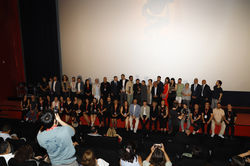
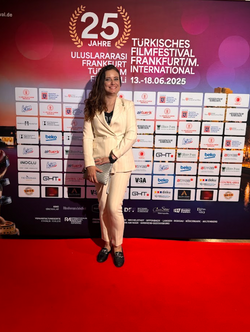
The 25th International Frankfurt Turkish Film Festival brought together audiences in Frankfurt and its surroundings between June 13–18, 2025, with 54 Turkish and German feature films, short films, and documentaries. In addition, within the scope of its Social Responsibility Project, high school students and residents of nursing homes were introduced to cinema. Alongside the film program, the festival offered a multifaceted program to its visitors with award ceremonies, panels, exhibitions, and concerts organized within the framework of the festival.
We believe that over the past 25 years, the festival has established a deep-rooted place in Frankfurt’s artistic and cultural life and has now become a solid part of this bigger picture. As the Head of the Department of Culture of the City of Frankfurt, Dr. Ina Hartwig, frequently emphasizes, we have made a significant contribution to Frankfurt becoming an international and multicultural metropolis. The clearest indication of this is that numerous international political and cultural representatives in Frankfurt have been among the most loyal visitors of our festival for years, and that we are invited to some of the most important festivals both domestically and internationally. Our festival has also started to become a meeting point for international production companies. Through these meetings, Turkish artists and German producers have collaborated on many productive projects.
For many years, our festival has collaborated with respected institutions, associations, and organizations such as Deutsches Filmmuseum and Filmhaus Frankfurt. In addition, many Turkish associations and organizations provide their support to our festival. The network we have established with various companies demonstrates the economic importance of our festival for Frankfurt.
Our achievements have been recognized with several awards: the Integration Award presented by the City of Frankfurt in 2012, the Order of Merit of the Federal Republic of Germany in 2014, the Goethe Award from the Ministry of Science and Culture of the State of Hesse in 2017, and in the same year, the inclusion of our festival among the limited number of A-category festivals in Germany by the Hessian Ministry of Science and the Arts. With a more vibrant and multi-layered audience each year and an ever-growing program capacity, the expectations and cultural goals of the Turkish Film Festival continue to rise over time. Our audience, festival partners, companies supporting film screenings, producers, sponsors, and media partners rightfully expect a festival that grows bigger and becomes more widely recognized internationally.
In our 25th “SILVER YEAR,” despite challenges such as wars in our surroundings and the global economic crisis, we believe that we have met these expectations by organizing our festival in the best possible way.
The International Frankfurt Turkish Film Festival not only promotes Turkish culture and Turkish cinema accurately in Germany, but also makes a significant contribution to strengthening the national sentiments of our citizens living there, bringing them together around shared values, providing them with the morale of knowing that the Republic of Türkiye stands by them, and ensuring the accurate representation of Türkiye to German society and other communities living there.
Because cinema is the most important art form that can touch everyone.
 |  |  |  |
|---|---|---|---|
 |  |  |  |
 |  |  |  |
 |  |
.png)
Cultural Transnational Film Perspectives Project
Cultural Transnational Film Perspectives (2024-1-TR01-KA153-YOU-000213523) is an intercultural cinema project carried out in Frankfurt, Germany, between June 12–19, 2025, with the support of the European Union Erasmus+ Programme, in partnership with the Intercultural Cooperation and Dialogue Association from Türkiye and Transfer zwischen den Kulturen e.V. / Frankfurt Filmhaus from Germany. The project aimed to strengthen intercultural dialogue through cinema by bringing together young people, academics, and creative professionals interested in cinema and culture from Türkiye and Germany; to develop participants’ creative expression skills through themes such as migration, identity, representation, shared narratives, and the language of cinema in Europe; and to establish sustainable cultural collaborations between the two countries. In line with these objectives, the program began with creative drama workshops that fostered trust and interaction;
During the workshop held on June 13, in addition to warm-up games, role-playing, and improvisation exercises, group games such as “Bird Cage” and emotional reenactments using the “freeze frame” technique were conducted. This strengthened group dynamics, reinforced body language, empathy, and cultural sensitivity, and helped establish a shared creative language among participants.
In the Cinema101 session on June 14, interactive discussions were held around the questions “What is cinema, what does it convey, and how does it affect us?”; through short film screenings and emotional analysis, participants explored how cinematic language conveys emotion. This was followed by group work transitioning into short film production, where participants experienced story development, task distribution, shoot planning, filming, and basic editing processes. The extended creative drama session on June 15 deepened around themes of identity, identification with objects, and character analysis; through category games, physical expression and team cohesion were strengthened, while exercises such as embodying the concept of “identity,” reflecting emotional states physically, character selection through short films, exploring the “inner voice” of characters, and reenactments in different scenarios supported participants in concretizing abstract concepts, non-verbal communication, group empathy, and sensory awareness.
On June 16, during the “Erasmus+ Project Writing & Film Criticism” session, previously produced short films were watched and analyzed critically, with feedback provided on narrative, editing, and technical aspects. At the same time, applied learning was delivered on Erasmus+ project writing techniques, including needs analysis, logical framework, dissemination, and budgeting. Cultural exchange was further enriched through a city tour and social activities.
In the team-building and creativity workshop on June 17, cooperation-focused activities such as the “Human Knot” strengthened problem-solving and communication skills; creative event designs for the Turkish-German Film Festival were developed and presented; and through improvisational theater exercises and the closing circle titled “If this project were a film…”, participants’ creativity, expression through humor, group cohesion, and cultural synthesis were reinforced.
On June 18, free time was provided to further enhance interaction between German and Turkish participants, and cultural nights were organized at the end of the day; participants had the opportunity to get to know each other more closely by sharing their own cultures. At the end of the project, participants produced short films expressing their emotions through cinematic language; lasting collaborations and friendships were established between young people from Türkiye and Germany, practical gains related to the Erasmus+ process and project writing were reinforced, and a strong foundation for sustainable future co-productions between the cinema and cultural ecosystems of the two countries was established.
CLICK HERE FOR THE POLICY TEXT
CLICK HERE FOR THE PROJECT SHORT FILMS
 |  |  |  |
|---|---|---|---|
 |  |
TURKISH CULTURE DAYS IN JORDAN
Yunus Emre Cultural Center – Amman | June 1-10, 2014
General Overview
Turkish Culture Days in Jordan is a comprehensive cultural and artistic organization successfully held in Amman by the Intercultural Cooperation and Dialogue Association, in collaboration with the Yunus Emre Institute and B Agency, bringing Türkiye’s cultural, artistic, and social heritage together with audiences in the Middle East.
Throughout the 10-day program, a wide range of activities—from music to cinema, traditional handicrafts to gastronomy, and academic conferences to public performances—were carried out, strongly supporting cultural dialogue and mutual interaction between Türkiye and Jordan.
With its high level of participation, strong media visibility, and internationally qualified content, the festival stood out as an exemplary project in terms of cultural diplomacy.
Purpose and Scope
The main objectives of Turkish Culture Days in Jordan are:
-
To present Türkiye’s contemporary and traditional cultural identity in the Middle East in an accurate and impactful way,
-
To bring together Turkish and Jordanian artists, academics, and cultural professionals on a common platform,
-
To strengthen cultural, artistic, and social relations between the two countries in a sustainable manner,
-
To deepen intercultural dialogue through culture and art.
Within this framework, the festival was designed as a multidisciplinary structure combining art, cinema, music, gastronomy, performing arts, and academic content.
Main Activities Carried Out
🎶 Concerts and Music Events
The festival began with the opening concert of Jehan Barbur, followed by performances from Mustafa Ceceli, Ferhat Göçer, artists from the Ministry of Culture and Tourism, and Tuluyhan Uğurlu. Tuluyhan Uğurlu’s piano recital titled “Sun Country Anatolia,” presented with visual accompaniment, attracted great attention as one of the festival’s most distinguished artistic performances.
🎬 Film Screenings and Talks
Selected works of Turkish cinema were presented to audiences with Arabic subtitles. Films such as My Father and My Son, Mommo: My Sister, and Circassian were screened. A talk held with director Muhittin Kandur was followed with great interest by cinema circles and the press.
🎭 Meetings with Turkish TV Actors and Producers
Talks and autograph sessions organized with actors and producers of Turkish TV series—highly popular in the Middle East—became one of the most attended segments of the festival. The participation of renowned director and producer Osman Sınav highlighted the cultural impact and narrative strength of Turkish series in the region, while the meetings significantly increased the festival’s visibility through extensive media coverage.
🎨 Traditional Turkish Handicrafts and Exhibitions
The tile art exhibition and live demonstrations by Halil Cin, along with Betül Burnaz’s painting exhibition, were open to visitors throughout the day. Thanks to workshop activities, participants had the opportunity to experience the production processes firsthand.
☕ Turkish Cuisine and Gastronomy Presentations
Turkish cuisine presentations and workshops led by renowned chef Arda Türkmen were among the most popular events of the festival. Traditional flavors such as Turkish coffee, candied chestnuts, and almond paste were introduced, and through hands-on experiences, Turkish cuisine gained wide coverage in Jordanian media.
🎭 Karagöz–Hacivat Performances
Karagöz–Hacivat shadow plays staged by Emin Şenyer, along with puppet-making workshops held afterward, became culturally enriching activities especially for children and families.
🎓 Conferences and Academic Events
The conference titled “A Historical Perspective on Turkish–Jordanian Relations” examined the historical and cultural ties between the two countries and was followed with great interest by academics, diplomats, and students.
Participating Artists and Guests
Key figures participating in the festival included:
Jehan Barbur, Mustafa Ceceli, Ferhat Göçer, Tuluyhan Uğurlu, Arda Türkmen, Halil Cin, Betül Burnaz, Emin Şenyer, Muhittin Kandur, Osman Sınav, artists from the Ministry of Culture and Tourism, and Turkish TV actors.
The participation of Osman Sınav made the strong influence of the Turkish TV and cinema industry in the Middle East more visible and increased the cultural and artistic significance of the festival.
Media and Public Impact
Through press releases, promotional films, and event content prepared before and during the festival, it received extensive coverage in Jordanian and regional media. The events were featured on television, in print media, and across digital platforms, while social media engagement significantly increased the festival’s international visibility.
Conclusion and Evaluation
Turkish Culture Days in Jordan was successfully completed as a model organization that effectively introduced Türkiye’s cultural richness to the Middle East, creating a lasting environment for cultural interaction through art, cinema, music, and gastronomy.
The festival:
-
Made concrete contributions to Turkish–Jordanian cultural relations,
-
Strengthened Türkiye’s cultural visibility in the Middle East,
-
Established a strong reference point for culture- and art-based public diplomacy.
In this respect, Turkish Culture Days in Jordan stands as a successful and sustainable model for similar international cultural projects.
 |  |  |  |
|---|---|---|---|
 |  |
TÜRKİYE-EUROPE CULTURAL CENTER
ON THE TURKEY–EUROPE CULTURAL CENTER
The Turkey–Europe Cultural Center is founded upon the ideals that Europe has sought to realize since the Renaissance.
The Renaissance began in Italy but quickly spread across all of Europe. The philosophy of the Enlightenment emerged in France and, within a short time, encompassed other European nations as well. This simultaneity can be observed in almost every field across Europe. Art Nouveau-style architecture can be found in Paris, Riga, and Istanbul alike.
This fundamental understanding, in fact, also constitutes the building blocks of the European Union. Thus, a Europe emerges in which cities and countries, with both their differences and similarities, coexist in harmony.
The free movement of individuals and cultures in Europe did not arise solely with the idea of the European Union.
Even before—and especially after—the Renaissance, individuals and cultures have circulated within and influenced one another across Europe for centuries.
Concepts such as European literature, European painting, and European architecture were in use long before the idea of the EU and had tangible meaning in life. When we look at the lives of great artists who left their mark on European culture—from Leonardo to Rilke—we see not only the societies they emerged from, but also how they became Europeans in a broader sense.
It is also evident that this phenomenon is primarily a cultural matter. For centuries, European culture has served as a strong unifying force.
Today’s world, however, is moving toward what is called globalization—a rapid “single-economy” system and, consequently, a tendency toward becoming “single-cultured.”
The great writers and thinkers who form the foundation of cultures are being replaced by media celebrities. From opera to theater, all forms of art are retreating in the face of Hollywood dominance, and Europe’s rich and diverse cuisine is on the verge of being overshadowed by fast food.
It would be misguided to think that a Europe that has lost its cultural values could play an effective role in the future of the world. The loss of Europe’s cultural identity would, in a sense, mean the loss of humanity’s cultural past.
With its vast cultural heritage and values, Türkiye is in a position to contribute to the cultural values of the European Union in the future. With this richness and diversity, Türkiye has the potential to take part in a new cultural development for future generations of Europe.
New generations should be raised equipped with shared European ideals.
European cultural heritage represents one of the most advanced cultural levels achieved by humanity. This culture serves as a fundamental educational value for every individual in Europe. Shared cultural values, to which Turkish culture will also contribute, will serve as the essential elements that enable individuals and societies to understand and embrace one another.
The humanistic thought that began with thinkers such as Montaigne, Erasmus, Mevlana, and Yunus Emre will also form the foundation of the culture of the future.
The Turkey–Europe Cultural Center sets out with these fundamental goals, believing that the culture of Europe’s future, as in the past, will be one centered on the human being.
| | | |
|---|---|---|---|
| |